7.28.2011

Diabetic Ketoacidosis (DKA) and Cause

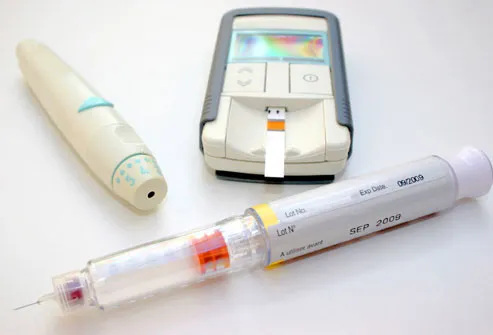
Diabetic Ketoacidosis (DKA) is the most important and demanding medical emergency within the fields of diabetology and endocrinology. As a minimum it seems reasonable to require that pH is below normal range and that levels of ketoacids (ketone bodies) in blood or urine are markedly elevated.
Contrary to popular belief deranged lipid metabolism is the main cause of DKA. In essence DKA is caused by uncontrolled lipolysis in adipose tissue and uncontrolled ketogenesis in liver. Adipose tissue is present in regional depots such as subcutaneous upper and lower body and visceral fat. Under physiological conditions lipolysis is tightly controlled by lipases. Hormone-sensitive lipase and probably also adipose triglyceride lipase stimulate release of free fatty acids and glycerol into the circulation. This process is inhibited by insulin and low insulin levels increase lipolysis swiftly. The stress hormones, such as epinephrine, growth hormone and cortisol, stimulate lipolysis. It is plausible that dehydration also participates in the stimulation of lipolysis. These events take place in the course of hours and may rapidly triple or quadruple blood concentrations of free fatty acids.
Ketogenesis occurs in the liver by oxidation of free fatty acids to ketoacids/ketone bodies. Physiologically ketone bodies provide important fuel energy for the brain and other tissues under fasting, prolonged exercise and other conditions of fuel shortage. In DKA ketogenesis becomes uncontrolled and circulating levels of ketone bodies rise manifold. This occurs because of both increased supply of fatty acids to the liver and because low levels of insulin and high levels of glucagon in the liver promote ketogenesis. In normal individuals this unrestrained process is prevented by compensatory rises in insulin secretion, but this does not occur in type 1 diabetes. <Hg>

source :
Mogensen, C. E., 2007, Pharmacotherapy of Diabetes:New Developments Improving Life and Prognosis for Diabetic Patients, Springer Science + Business Media, LLC, New York.
image : http://drugster.info/img/ail/1805_1817_1.jpg

7.04.2011

Diabetic Cake Low Calories

In my post some time ago about food for diabetic patients, I declare that the food is suitable for those with low calorie content. Diabetic cake this time is made by my mother that give an example for you. The following sample are some of the cakes my mother made.


Because it uses a camera with low resolution, the result is also not to good. But at least you can see examples of diabetic cake  and trying to make it.
<Hg>

Diabetic and Glaucoma

Diabetes is generally accompanied by complications if the disease is severe enough. Microvascular complications experienced by diabetics include retinopathy, neuropathy, and nephropathy. This time we will discuss about the complications associated with the eye.
Diabetics not generally just suffered complications retinopathy, but further complications that are often experienced by cataract and glaucoma. In a simple, retinopathy is damage to the cornea of the eye tissue which can be fatal blindness. meanwhile, Cataract is causing damage to the eye lens of the eye becomes webbed, murky and blurred vision. While the eye disease glaucoma is due to increased pressure on the eyeball resulting in nerve damage eyesight. Glaucoma are common in elderly patients over the age of 40 years.
High pressure in the eyeball in glaucoma patients caused of excessive production of Aquos Humor liquid or liquid drain blockage. In normal conditions, the liquid will flow regularly and serve moistened lens of the eye so as not to dry. 
The glaucomas are classified by the appearance of the iridocorneal angle. There are open-angle, closed-angle, and developmental categories, which are further divided into primary and secondary types. Primary open-angle glaucoma can occur with or without elevated intraocular pressure; the latter is sometimes called normal-tension glaucoma. Primary open-angle glaucoma includes both adult-onset disease (occurring after 40 years of age) and juvenile-onset disease (occurring between the ages of 3 and 40 years of age). Examples of secondary open-angle glaucomas include those associated with exfoliation or pigment-dispersion syndrome. Closed-angle glaucoma can be primary (e.g., pupillary block) or secondary (e.g., inflammatory or neovascular causes). Developmental forms of glaucoma include primary congenital glaucoma and glaucoma associated with syndromes (e.g., aniridia or the Axenfeld–Rieger syndrome). Primary open-angle glaucoma, the predominant form of glaucoma in Western countries (Kwon, Y. H., et all, 2009)
<Hg>
source : Kwon, Y. H., et all, 2009, Primary Open-Angle Glaucoma, N Engl J Med 2009;360:1113-24
image : http://www.apagrafix.com/patiented/glaucoma/GLAUCOMA3.jpg

7.03.2011

Gestational Diabetes Mellitus

Gestational DM is diagnosed as previously described. Dietary therapy to minimize wide fluctuations in blood glucose is of paramount importance. Pregnant women without DM maintain plasma glucose concentrations between 50 and 130 mg/dL. If fasting plasma glucose is>105 mg/dL, or 1-hour postprandial plasma glucose levels are>155 mg/dL, or if 2-hour postprandial plasma glucose levels are >130 mg/dL, insulin therapy is usually begun. One shot of NPH or a mixture of NPH and regular insulin in a 2:1 ratio given before breakfast may be adequate to reach glucose targets. Adequate control of blood glucose was achieved as compared to traditional insulin therapy, with less hypoglycemia in the glyburide group. No evidence of any difference in complications, specifically cord-serum insulin concentrations, incidence of macrosomia, cesarean delivery, or neonatal hypoglycemia between regimens were noted. Glyburide was not detected in the cord serum of any infant. As the study limited enrollment beyond 11 weeks’ gestation, no conclusions regarding teratogenicity can be made from this study. 12 Patients with gestational DM should be evaluated 6 weeks after delivery to ensure that normal glucose tolerance has returned. Because these patients’ long-term risk for the development of DM is considerable, periodic assessment after that is warranted (Dipiro, et all, 2005).


In addition to insulin and glyburide, there are other drugs that are known to improve diabetic conditions getational that is troglitazoneThis drug was reported capable of lowering blood sugar levels in patients with gestational diabetes by 55%, but this agent is no longer available (DeFronzo, et all, 2011). <Hg>


source : 
DeFronzo, et all, 2011, Pioglitazone for Diabetes Prevention in Impaired Glucose Tolerance,  N Engl J Med 2011;364:1104-15.
Dipiro, et all, 2005, PHARMACOTHERAPY A Pathophysiologic Approach, 6 Ed, McGRAW-HILL


image: http://drugster.info/img/ail/1290_1297_3.jpg

7.01.2011

Hiperlipidemia and Diabetic Cake

Making cake for diabetics, be careful in determining the composition of the material. Cake ingredients used must have  low IG (Glisemix Index). People with diabetes often arise from complications that accompany earlier. One of the factors that cause a person to be diabetics is hyperlipidemia.
Hyperlipidemia is a state in which the levels of fat in the blood increases to exceed the normal limits. Increased fat include cholesterol, triglycerides, or a combination of both. Cholesterol is an essential element found in all human cell membranes and structural component of steroid hormones and bile acids. Absence of cholesterol in the body will result in disruption of some body functions and can even be fatal. That is why cholesterol levels should be kept with in certain limits-not too high and not too small. Triglycerides, fat is an important component for the transfer of energy from food into body cells. lipoproteins are divided into several types according to its density. density is based on the amount of cholesterol, triglycerides, and apoprotein there.lipoprotein which has the highest density and smallest are calledhigh-density lipoproteins (HDL), also known as "good cholesterol".with lower density lipoprotein called low-density lipoproteins (LDL).while the type of lipoprotein that has the lowest density and greatestso-called very low-density lipoproteins (VLDL). Low-density lipoprotein (LDL) has the potential for causing health problems. LDLis increased with age and the normal limit of LDL is higher in menthan in women. hiperlidemia can progress to atherosclerosis, whichcan cause cardiovascular disorders, diabetes mellitus, and stroke. <Hg>

source : MIMS Indonesia, Ed. 8 2008/2009 and more source
image : http://www.dennysantoso.com/wp-content/uploads/2008/10/cholesterol.jpg 

6.28.2011

Diabetic Cake and Insulin Available

  Generic Name                   Analog*                                     Administration Options       
Rapid-acting insulin  
Humalog (insulin lispro)            yes                            insulin pen 3 mL, vial, and 3mL pen catridge
NovoLog (insulin aspart)          yes                            insulin pen 3 mL, vial, or 3mL pen catridge
Apidra (insulin glulisine)            yes                           insulin pen catridge or Opticlick pen system    

Short-acting insulin  
Humulin R (regular)                  no                               100 units, 10 mL vial; 500 unit, 20 mL vial
Novolin R (regular)                   no                          Insulin pen, vial, or 3mL pen catridge, and InnoLet    


Intermediate-acting insulin (NPH)  
Humulin N                                no                                              Vial, prefilled pen
Novolin N                                no                                  Vial, prefilled pen, and InnoLet    
Long-acting Insulins
Lantus (insulin glargine)            yes                                     Vial, 3mL OptiClick pen system
Levemir (insulin detemir)          yes                                  Vial, 3mL pen catridge and InnoLet


Premixed insulins  
Premixed insulin analogs
Humalog Mix 75/25                 yes                                          Vial, prefilled pen
(75% neutral protamine
lispro, 25% lispro)          
Novolog mix 70/30                 yes                                  Vial, prefilled pen, 3mL pen catridge
(70% aspart protamine
suspension, 30% aspart)    
Humalog Mix 50/50                 yes                                                         3 mL pen
(50% neutral protamine
lispro, 50% lispro)
NPH-regular combinations
Humulin 70/30                          no                                                Vial, prefilled pen
Novolin 70/30                          no                                        Vial, pen catridge, InnoLet
Humulin 50/50                          no                                                      Vial    


Other Injectable preparations  
Exenatide (Byetta)                    no                              5 mcg/dose and 10 mcg/dose, 60 dose prefilled pen
Pramlintide (Symlin)                 yes                                  5 mL vial, 1-5 mL and 2-7 mL SymlinPen

NPH, neutral protamine Hagedorn
* All insulins available on US are made by human recombinant DNA technology. An insulin analog is a modified human insulin molecul that imparts particular pharmacokinetic adventages.


source : Pharmacotherapy Handbook, 2009, 7th Ed, by Dipiro et all

Diabetic Cake Nutrition and Exercise

Medical nutrition therapy is recommended for all patients. For individuals with type 1 DM, the focus is on regulating insulin administration with a balanced diet to achieve and maintain a healthy body weight. A meal plan that is moderate in carbohydrates and low  in saturated fat, with a focus on balanced meals is recommended. In addition, patients with type 2 DM often require caloric restriction to promote weight loss. Bedtime and between-meal snacks are not usually needed if pharmacologic management is appropriate.

Aerobic exercise can improve insulin resistance and glycemic control in most patients and may reduce cardiovascular risk factors, contribute to weight loss or maintenance, and improve well-being. Exercise should be started slowly in previously sedentary patients. Older patients and those with atherosclerotic disease should have a cardiovascular evaluation prior to beginning a substantial exercise program.

source : Pharmacotherapy Handbook, 2009, 7th Ed. by Dipiro et all
image : http://www.keyvive.com/wp-content/uploads/2010/10/Diabetic-foods-diet-nutrition.jpghttp://www.astepbehind.com/wp-content/uploads/2009/05/aerobics.jpg